
1. High-Quality Ingredients
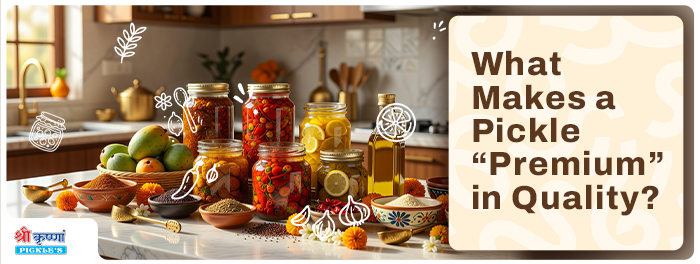
The foundation of any premium pickle begins with carefully selected ingredients. Fresh, seasonal fruits or vegetables—whether it’s mango, lemon, chili, or mixed vegetables—play a crucial role. Premium pickles avoid overripe or damaged produce and instead use firm, flavorful raw materials.
Equally important are the spices and oils. Authentic spices, often sourced from trusted regions, bring depth and aroma. Cold-pressed oils, such as mustard or sesame, are commonly preferred because they enhance both taste and shelf life without compromising quality.
2. Traditional Preparation Methods
Premium pickles are rarely rushed. They often follow traditional, time-tested methods of preparation that have been passed down through generations. Slow curing, natural fermentation, and sun-drying are key processes that allow flavors to develop gradually and naturally.
Unlike mass-produced pickles, which may rely on artificial preservatives or shortcuts, premium varieties respect the art of patience. This results in a richer, more authentic taste.
3. Perfect Balance of Flavors
A hallmark of a premium pickle is its balance. No single element—salt, spice, sourness, or sweetness—should overpower the others. Instead, each bite should deliver a harmonious blend of flavors.
For example:
The tanginess should be sharp but not harsh
The spice level should enhance, not dominate
The salt should preserve without overwhelming
Achieving this balance requires expertise and precise measurement, which is why premium pickles often stand out immediately in taste tests.
4. Natural Preservation
Premium pickles prioritize natural preservation techniques. Salt, oil, and acidity (from vinegar or citrus) act as natural preservatives, eliminating the need for artificial chemicals.
This not only makes the pickle healthier but also ensures that the original flavors remain intact over time. A clean ingredient list is often a strong indicator of premium quality.
5. Texture and Consistency
Texture is just as important as taste. A premium pickle maintains the integrity of its main ingredient:
Mango pieces should be firm, not mushy
Chilies should retain their bite
Mixed vegetables should not feel soggy
Consistency in texture reflects careful preparation and proper storage techniques.
6. Hygiene and Packaging
Cleanliness during preparation is non-negotiable for premium pickles. From washing and drying ingredients to storing them in sterilized containers, hygiene plays a major role in both safety and longevity.
Packaging also matters. Airtight, food-grade containers help preserve freshness, prevent contamination, and maintain flavor for extended periods.
7. Authenticity and Craftsmanship
Premium pickles often carry a story—whether it’s a regional specialty or a family recipe. This authenticity adds value that goes beyond taste. Small-batch production, handcrafted processes, and attention to detail all contribute to a superior product.
Consumers today increasingly appreciate this craftsmanship, recognizing that quality cannot be mass-produced.
Conclusion
A premium pickle is not defined by price alone—it is the result of thoughtful ingredient selection, traditional preparation, balanced flavors, and genuine care in every step of the process. From the first crunch to the lingering aftertaste, it offers an experience that ordinary pickles simply cannot match.
So the next time you pick up a jar, look beyond the label. A truly premium pickle will reveal itself through its taste, texture, and authenticity—one delicious bite at a time.
Leave a Comment