
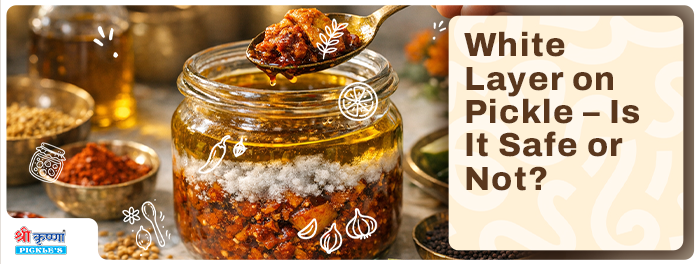
What Is the White Layer on Pickles?
The white layer you see is usually a type of harmless yeast or residue that forms on the surface. In many cases, it’s known as kahm yeast, which develops in fermented foods when exposed to air. It may look concerning, but it doesn’t always mean the pickle has spoiled.
However, not every white layer is safe—so identifying the difference is important.
When Is It Safe?
The pickle is generally safe to consume if:
The white layer is thin, flat, and not fuzzy
There is no foul or rotten smell
The pickle still tastes normal (slightly tangy or spicy)
The texture of the pickle pieces remains firm
In such cases, you can carefully remove the top layer and continue using the pickle. Adding a little extra oil or salt can also help prevent it from forming again.
When Is It Not Safe?
You should discard the pickle immediately if you notice:
Fuzzy, cotton-like growth (white, green, or black)
A strong unpleasant or rotten odor
Slimy or overly soft texture
Bubbling or unusual fermentation after storage
These are signs of mold or bacterial spoilage, which can be harmful if consumed.
Why Does This White Layer Form?
There are several reasons why a white layer may develop:
Exposure to air due to loose lids or low oil levels
Moisture entering the jar through wet spoons or hands
Insufficient salt or preservative levels
Storing pickles in warm or humid conditions
Understanding these causes can help you prevent the problem in the future.
How to Prevent White Layer Formation
Keeping your pickles fresh and safe is easy with a few precautions:
Always use clean, dry utensils
Ensure the pickle is fully covered with oil (for oil-based pickles)
Store in an airtight container
Keep the jar in a cool, dark place or refrigerate during summer
Avoid introducing water into the jar
Final Verdict
A white layer on pickles is not always dangerous—but it should never be ignored. If it’s a harmless surface yeast, you can safely remove it and enjoy your pickle. But if there are any signs of mold or spoilage, it’s best to play it safe and discard the entire batch.
When in doubt, trust your senses—smell, look, and texture will usually tell you whether your pickle is still good to eat.
With proper care and storage, you can keep your pickles fresh, safe, and delicious for a long time.
Leave a Comment