
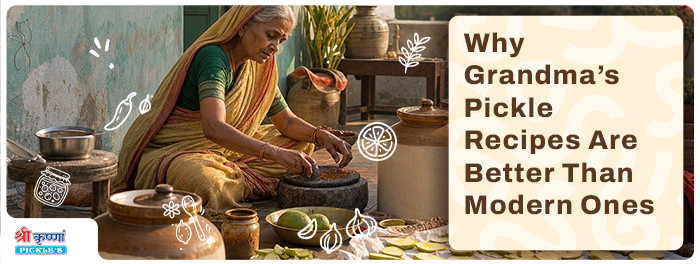
In today’s fast-paced world, convenience often takes priority over tradition. Ready-made pickles line supermarket shelves, offering quick solutions to satisfy cravings. Yet, despite modern advancements, there’s something about grandma’s homemade pickle recipes that continues to stand unmatched. The rich aroma, bold flavors, and nostalgic taste remind us that some traditions are simply timeless.
So, what makes grandma’s pickle recipes better than modern ones? Let’s take a closer look.
1. Made with Patience, Not Preservatives
Grandma’s pickles were never rushed. From carefully selecting the freshest fruits and vegetables to sun-drying and slow curing, every step was done with patience. This natural process allowed the ingredients to develop deep, authentic flavors.
Modern pickles, on the other hand, often rely on preservatives and shortcuts to extend shelf life and speed up production. While convenient, they rarely capture the same depth and richness of taste that traditional methods offer.
2. Pure Ingredients, No Compromise
Traditional pickle recipes used simple, natural ingredients—fresh mangoes, lemons, chillies, hand-ground spices, and pure oils like mustard oil. There were no artificial colors, flavors, or additives.
At Shri Krishna Pickles, this philosophy continues. By sticking to high-quality, authentic ingredients, the brand ensures that every jar reflects the purity and taste of homemade pickles, just like grandma used to make.
3. The Magic of Handcrafted Preparation
Grandma didn’t just make pickles—she crafted them. Each spice blend was adjusted by instinct, each batch tasted and perfected with experience. This personal touch created a unique flavor that machines simply cannot replicate.
Modern production often focuses on consistency and volume, which can sometimes come at the cost of character and individuality. Handmade pickles carry a warmth and authenticity that mass-produced ones often lack.
4. Sun-Kissed Perfection
One of the secrets behind traditional pickles is sun curing. Jars were placed under natural sunlight for days, sometimes weeks, allowing the flavors to mature slowly. This process not only enhanced taste but also acted as a natural preservative.
Today, many commercial methods skip or shorten this step, using artificial techniques instead. The result? A pickle that may look similar but doesn’t deliver the same depth of flavor.
5. Healthier and More Wholesome
Grandma’s recipes focused on balance and nourishment. Mustard oil, traditional spices, and natural fermentation methods offered health benefits such as improved digestion and immunity support.
Modern pickles, with added preservatives and excessive salt or vinegar, may not always provide the same health advantages. Choosing traditionally prepared pickles can be a more wholesome option for your diet.
6. A Taste of Memories and Culture
Perhaps the most beautiful part of grandma’s pickle recipes is the emotional connection they carry. Every jar tells a story—of summer afternoons, family gatherings, and recipes passed down through generations.
Pickles were not just food; they were a part of culture and tradition. They brought families together and added a special touch to everyday meals.
7. Tradition Meets Trust at Shri Krishna Pickles
At Shri Krishna Pickles, the essence of grandma’s recipes is preserved with care. By combining traditional techniques with modern hygiene standards, the brand delivers pickles that are both safe and soulful.
Each product reflects a commitment to authenticity, ensuring that every bite takes you back to the comforting flavors of home.
Conclusion
While modern pickles offer convenience, they often fall short of the authenticity, richness, and emotional value found in grandma’s recipes. The slow process, pure ingredients, and handcrafted care make traditional pickles truly special.
In a world that is constantly evolving, holding on to such timeless flavors is not just about taste—it’s about preserving a legacy. And with brands like Shri Krishna Pickles, you can continue to enjoy that legacy in every bite.
Leave a Comment