
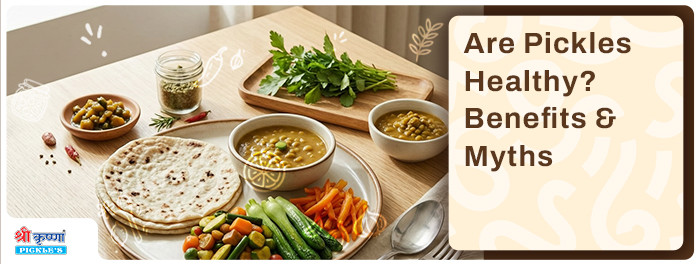
Pickles have been a beloved part of Indian meals for generations. Whether it’s a spoonful alongside dal-chawal or a spicy bite with parathas, pickles add a burst of flavor that’s hard to resist. But a common question people ask is: Are pickles actually healthy?
Let’s break down the facts, explore the benefits, and clear up some common myths.
What Are Pickles Made Of?
Traditional Indian pickles (achar) are usually made using fresh fruits or vegetables like mango, lemon, or chili, combined with salt, spices, and oil. Many are naturally fermented, which plays a key role in their nutritional value.
Health Benefits of Pickles
1. Rich in Probiotics (for fermented pickles)
Fermented pickles are packed with beneficial bacteria that support gut health. These probiotics can improve digestion and help maintain a healthy balance of gut flora.
2. Aid Digestion
The spices used in pickles—like mustard seeds, fenugreek, and asafoetida—are known for their digestive properties. They can stimulate digestive enzymes and reduce bloating.
3. Source of Antioxidants
Pickles made from fruits and vegetables retain many natural antioxidants. These help fight free radicals and support overall health.
4. Boost Appetite
Pickles are known to enhance taste and stimulate appetite, especially helpful for people who struggle with low appetite or during illness.
5. Long Shelf Life Without Preservatives
Traditional pickling methods rely on oil, salt, and natural fermentation rather than artificial preservatives, making them a more natural food option.
Common Myths About Pickles
Myth 1: Pickles Are Always Unhealthy
Not true. While excessive consumption can be harmful, moderate intake—especially of homemade or traditionally prepared pickles—can be beneficial.
Myth 2: Pickles Only Contain Salt and Oil
While salt and oil are key ingredients, pickles also contain spices, herbs, and the original fruit or vegetable, all of which add nutritional value.
Myth 3: Pickles Cause Weight Gain
Pickles themselves are not high in calories. However, overeating oily pickles in large quantities may contribute to excess calorie intake.
Myth 4: All Pickles Are the Same
There’s a big difference between naturally fermented, traditional pickles and commercially processed ones loaded with preservatives and artificial flavors.
Things to Keep in Mind
Moderation is key: Pickles are high in sodium, so overconsumption can lead to health issues like high blood pressure.
Choose quality: Opt for homemade or traditionally prepared pickles over heavily processed varieties.
Balance your diet: Pickles should complement your meals, not replace healthy foods.
Final Thoughts
Pickles can absolutely be a part of a healthy diet when consumed in moderation. They offer digestive benefits, enhance flavor, and bring a touch of tradition to your plate. The key lies in choosing the right kind of pickle and enjoying it in balanced portions.
So, the next time you reach for that jar of achar, you can enjoy it guilt-free—just remember, a little goes a long way!
Leave a Comment