
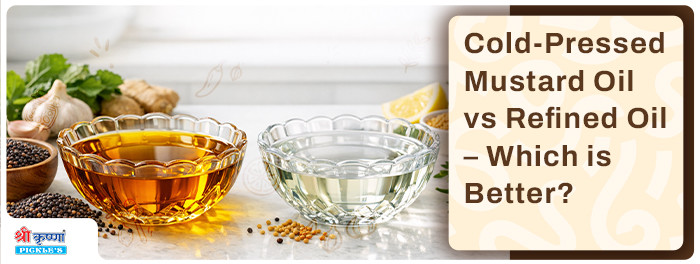
Choosing the right cooking oil is more important than most people realize. It affects not just the taste of your food, but also your long-term health. Among the many options available, two commonly debated choices are cold-pressed mustard oil and refined oil. While both are widely used, they are very different in how they are processed and how they benefit your body.
Let’s break it down in a simple and practical way so you can decide what truly suits your kitchen.
What is Cold-Pressed Mustard Oil?
Cold-pressed mustard oil is extracted using a traditional method where mustard seeds are crushed at low temperatures. This process avoids excessive heat and chemicals, helping the oil retain its natural nutrients, aroma, and flavor.
At Shri Krishna Pickles, we believe in preserving authenticity, and cold-pressed oils reflect that same philosophy—pure, rich, and closer to nature.
What is Refined Oil?
Refined oil goes through multiple stages of processing, including heating, bleaching, and chemical treatment. These steps make the oil look clearer and extend its shelf life, but they also strip away many of its natural nutrients.
Refined oils are often marketed as “light” or “neutral,” but the process behind them is far from natural.
Key Differences You Should Know
1. Nutritional Value
Cold-pressed mustard oil retains essential nutrients like omega-3 fatty acids, antioxidants, and vitamins. Refined oil, on the other hand, loses most of these during processing.
2. Processing Method
Cold-pressed oil is made without chemicals and at low temperatures. Refined oil undergoes heavy industrial processing, often involving additives.
3. Taste and Aroma
Mustard oil has a strong, distinctive flavor that enhances traditional Indian dishes. Refined oil is neutral, which may suit some recipes but lacks character.
4. Health Impact
Cold-pressed mustard oil supports heart health, digestion, and immunity when used in moderation. Refined oils may contain trace chemicals and have reduced health benefits due to over-processing.
5. Smoke Point
Refined oils usually have a higher smoke point, making them suitable for deep frying. However, mustard oil can also be used for cooking when heated properly (smoking it lightly before use).
So, Which is Better?
If your priority is health, purity, and authentic taste, cold-pressed mustard oil clearly stands out. It aligns with traditional cooking practices that have been trusted for generations.
Refined oil may offer convenience and longer shelf life, but it comes at the cost of nutrition and natural goodness.
The Shri Krishna Pickles Perspective
At Shri Krishna Pickles, we understand the value of ingredients that are simple, natural, and wholesome. Just like our pickles are made with care and traditional recipes, we encourage choosing oils that support a healthier lifestyle.
Cold-pressed mustard oil is not just an ingredient—it’s a return to roots, where food is nourishing as well as flavorful.
Final Thoughts
In the debate of cold-pressed mustard oil vs refined oil, the answer depends on what you value more—natural nutrition or processed convenience. For those who prefer real taste and real health benefits, cold-pressed mustard oil is the clear winner.
Make the switch, and your body (and your taste buds) will thank you.
Leave a Comment