
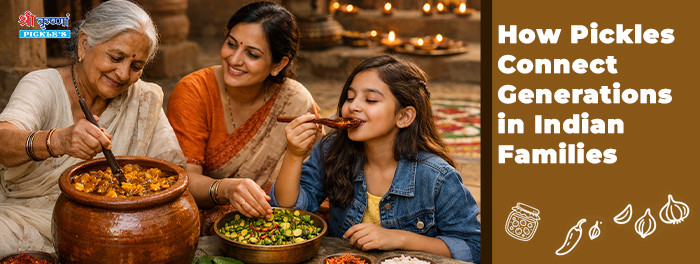
In Indian households, pickles are more than condiments — they are carriers of culture, memory, and love. Passed from one generation to the next, pickle recipes connect grandparents to grandchildren in ways few foods can. One spoonful can bring back stories, traditions, and a deep sense of belonging.
The First Lesson in the Kitchen
Many children in Indian families learn their first cooking lesson not from elaborate dishes, but from watching elders make pickles. From washing mangoes to drying lemons and grinding spices, every step becomes a lesson in patience and care. These moments quietly build a bridge between generations — through shared work and shared wisdom.
Seasonal Rituals and Family Bonding
Pickle-making is often a seasonal activity, especially during summer. Families come together to prepare large batches of mango, lemon, gooseberry, or chilli pickles. These gatherings turn into storytelling sessions — elders share memories, traditions, and even family secrets while younger members listen, laugh, and learn.
The pickle jar becomes a time capsule, preserving not just food, but moments of togetherness.
Recipes That Carry Stories
Unlike printed cookbooks, most pickle recipes live in memory. “Add spices by feel,” “let it rest in sunlight,” or “wait till the aroma changes” — these instructions are passed down verbally. Each generation adds its own touch while respecting the original, making the recipe both timeless and evolving.
Grandmothers: The Guardians of Flavor
In many Indian homes, grandmothers are the heart of pickle traditions. Their experience guides the balance of salt, spice, and oil. Even today, people often say, “It tastes just like Nani’s or Dadi’s pickle,” proving how deeply their flavors are tied to emotional memory.
Pickles at Every Life Stage
From childhood lunches to wedding feasts and even post-marriage kitchens, pickles follow Indians through every phase of life. A bride often carries her mother’s pickle recipe into her new home, ensuring that her childhood flavors continue in the next household.
In this way, pickles travel — not just across kitchens, but across generations.
Why Pickles Hold Emotional Power
Pickles connect generations because they:
- Are handmade with care
- Represent tradition and patience
- Carry personal and family identity
- Bring comfort during simple meals
They remind us that food isn’t just nourishment — it’s emotion, memory, and heritage.
Final Thoughts
In a fast-changing world, pickle-making remains a slow, meaningful tradition in Indian families. Each jar holds more than spices and oil — it holds history, love, and connection.
So the next time you open a pickle jar, remember: you’re not just tasting food — you’re tasting generations.
Leave a Comment