
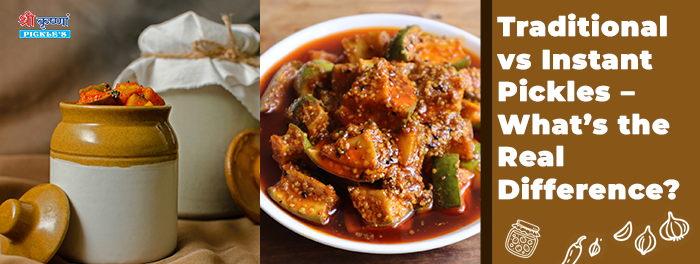
Pickles have been an essential part of Indian meals for centuries. From tangy mango to spicy lemon and garlic varieties, pickles add bold flavor and personality to everyday food. Today, however, many people are torn between traditional pickles and instant pickles. Both have their own charm, but they differ significantly in preparation, taste, shelf life, and health impact. Let’s explore the real difference between the two.
1. Preparation Process
- Traditional Pickles
Traditional pickles are made using age-old methods. Fruits or vegetables are cleaned, dried thoroughly, mixed with salt, spices, and oil, and then stored in jars to mature naturally. The fermentation or curing process can take weeks or even months, allowing flavors to deepen over time. - Instant Pickles
Instant pickles, as the name suggests, are quick to prepare. Ingredients are cooked or mixed and are ready to eat within a few hours or a day. There is no long fermentation process, making them perfect for people who want fast results.
2. Taste and Flavor Depth
- Traditional Pickles
These pickles develop complex, layered flavors due to slow fermentation and aging. The spices blend naturally, and the pickle gains a rich aroma and balanced tanginess that improves over time. - Instant Pickles
Instant pickles usually have a sharper, fresher taste. Since they don’t undergo long fermentation, the flavors are more direct and less complex, though still delicious and vibrant.
3. Shelf Life and Storage
- Traditional Pickles
One of the biggest advantages of traditional pickles is their long shelf life. When prepared and stored properly, they can last for several months or even a year without refrigeration. - Instant Pickles
Instant pickles have a much shorter shelf life. They typically last a few days to a couple of weeks and often require refrigeration to stay fresh.
4. Health and Nutrition
- Traditional Pickles
Fermented pickles can offer digestive benefits due to natural probiotics. However, they may contain higher amounts of oil and salt, so portion control is important. - Instant Pickles
Instant pickles usually contain less oil and sometimes less salt, making them lighter. However, they lack the probiotic benefits that come from fermentation.
5. Convenience and Lifestyle Fit
- Traditional Pickles
These require time, patience, and careful preparation. They suit households that enjoy homemade foods and follow traditional cooking practices. - Instant Pickles
Instant pickles are perfect for modern, fast-paced lifestyles. They are ideal for small families, students, or anyone who wants fresh pickle flavor without long waiting periods.
Final Thoughts
The real difference between traditional and instant pickles lies in time, taste, and tradition. Traditional pickles offer depth, longevity, and cultural richness, while instant pickles provide speed, freshness, and convenience. Neither is better than the other — it simply depends on your taste preferences, lifestyle, and how quickly you want your pickle fix.
Whether you enjoy the slow-crafted richness of traditional pickles or the quick zest of instant ones, both bring joy and flavor to your meals in their own unique ways.
Leave a Comment