
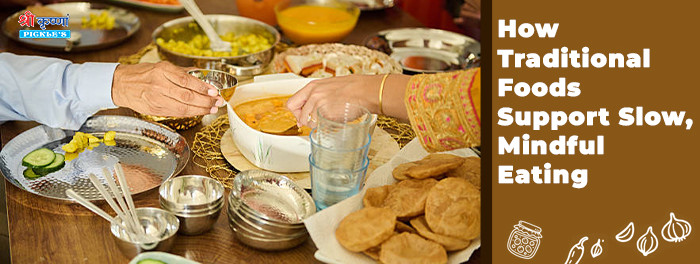
In today’s fast-paced world, eating has become something we often rush through—meals are skipped, eaten on the go, or consumed while staring at screens. This shift has distanced us from the natural rhythm of eating. Traditional foods, however, offer a powerful reminder that meals were once about patience, presence, and connection. Rooted in culture and tradition, these foods naturally encourage slow, mindful eating that benefits both body and mind.
Traditional Foods Are Made to Be Savored
Unlike modern ultra-processed foods designed for convenience and instant gratification, traditional dishes often feature complex flavors, textures, and aromas. They are not meant to be swallowed quickly but enjoyed gradually. Fermented foods, slow-cooked stews, hand-ground spices, and whole grains invite the eater to pause and appreciate each bite.
This sensory richness encourages mindfulness by engaging taste, smell, and texture, making eating a more intentional and satisfying experience.
Time-Intensive Preparation Builds Awareness
Many traditional foods require time and care to prepare—soaking grains, fermenting batters, simmering broths, or slow-roasting ingredients. This extended preparation process builds a deeper awareness of food even before it reaches the plate.
When people invest effort in cooking, they are more likely to respect the meal and eat it attentively. The act of preparation creates a natural transition from cooking to conscious consumption.
Whole Ingredients Promote Natural Eating Pace
Traditional cuisines rely heavily on whole, minimally processed ingredients such as legumes, vegetables, grains, seeds, and natural fats. These foods are rich in fiber and require more chewing, which automatically slows down eating.
Chewing thoroughly gives the brain enough time to register fullness, reducing the chances of overeating. This natural pace supports better digestion and helps the body absorb nutrients more efficiently.
Cultural Eating Practices Encourage Mindfulness
In many cultures, traditional meals are shared experiences rather than solitary activities. Families gather, food is served in courses, and eating is accompanied by conversation rather than distraction. This communal aspect encourages slower eating and deeper appreciation of the meal.
Traditional practices such as eating with hands, sitting on the floor, or offering gratitude before meals further strengthen the connection between the eater and the food.
Fermented Foods Enhance Gut Awareness
Fermented foods like yogurt, kimchi, sauerkraut, dosa batter, and pickles are staples in many traditional diets. These foods support gut health, which plays a key role in appetite regulation and hunger cues.
A healthier gut improves the body’s ability to recognize when it is satisfied, naturally supporting mindful eating habits without conscious restriction.
Seasonal and Local Foods Foster Connection
Traditional diets are closely tied to seasons and local availability. Eating foods that align with the time of year creates a stronger awareness of nature’s rhythms. This connection helps people tune in to their bodies’ changing needs, encouraging more thoughtful food choices and slower consumption.
Seasonal eating also reduces reliance on heavily processed foods that are often eaten mindlessly.
Rituals Turn Meals Into Intentional Moments
Traditional food cultures often include rituals—washing hands before eating, serving elders first, or beginning meals with a moment of gratitude. These small practices act as mental cues that it is time to slow down and be present.
Such rituals transform eating from a mechanical task into a meaningful experience, reinforcing mindful habits over time.
Traditional Foods Naturally Reduce Emotional Eating
Because traditional meals are more filling, nourishing, and satisfying, they reduce the urge for constant snacking. Balanced meals with healthy fats, proteins, and complex carbohydrates stabilize blood sugar levels, helping prevent emotional or impulsive eating.
When the body feels nourished, the mind is less likely to seek food as a distraction.
Rediscovering the Wisdom of Traditional Eating
Traditional foods are more than recipes passed down through generations—they are systems of nourishment designed to align with human biology. By encouraging slower eating, deeper awareness, and a stronger connection to food, they support mindful eating in a way modern convenience foods often cannot.
Reintroducing traditional foods into daily life is not about rejecting modernity, but about reclaiming balance. In doing so, meals become moments of nourishment, reflection, and care—exactly as they were meant to be.
Leave a Comment