
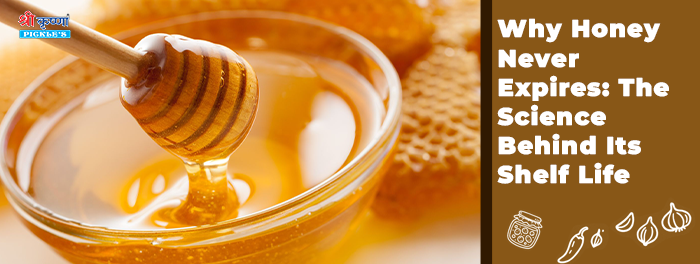
Honey has fascinated humans for thousands of years—not just for its sweetness, but for its remarkable ability to last indefinitely. Archaeologists have discovered pots of honey in ancient Egyptian tombs that were still perfectly edible after more than 3,000 years. While most foods spoil within days, weeks, or months, honey seems to defy time itself. So what makes honey so special? The answer lies in a unique combination of chemistry, biology, and a little help from bees.
A Low-Moisture Environment That Stops Spoilage
One of the main reasons honey never expires is its extremely low water content. Fresh honey contains only about 17–18% water, which is far less than what bacteria and fungi need to survive. Most microorganisms require moisture to grow and reproduce. In honey, the lack of available water creates a hostile environment where microbes simply cannot thrive.
Bees play a crucial role here. They begin with nectar, which is mostly water, and gradually reduce its moisture by repeatedly regurgitating and re-ingesting it. They then fan the nectar with their wings inside the hive, further evaporating excess water until it becomes thick, stable honey.
High Sugar Concentration: Nature’s Preservative
Honey is composed mostly of sugars—primarily glucose and fructose. This high sugar concentration creates what scientists call osmotic pressure. In simple terms, sugar draws water out of microbial cells through osmosis. When bacteria or yeast cells land in honey, the sugar pulls moisture from them, dehydrating and killing them before they can multiply.
This same principle is why sugar has been used for centuries to preserve fruits in jams and jellies. Honey, however, takes this preservation effect to an extreme.
Naturally Acidic pH
Another factor contributing to honey’s long shelf life is its acidity. Honey typically has a pH between 3.2 and 4.5, making it acidic enough to inhibit the growth of many harmful microorganisms. Most bacteria prefer a neutral environment, and honey’s acidity makes survival difficult for them.
This acidity develops naturally as bees convert nectar into honey, producing organic acids such as gluconic acid in the process.
Hydrogen Peroxide: A Built-In Antibacterial System
Honey also contains small amounts of hydrogen peroxide, a compound widely known for its antiseptic properties. When bees add enzymes to nectar, one of those enzymes—glucose oxidase—reacts with glucose and oxygen to form hydrogen peroxide.
Although the amount is low, it is enough to give honey its antibacterial qualities without damaging human tissue. This is one reason honey has been used in traditional medicine and wound care for centuries.
The Role of Bees’ Enzymes
Bees don’t just collect nectar; they chemically transform it. The enzymes they introduce break complex sugars into simpler ones and create compounds that resist spoilage. This enzymatic activity is essential in turning a highly perishable liquid (nectar) into one of the most stable foods known to humanity.
Without these enzymes, honey would not have the same preservative powers.
Why Honey Sometimes Crystallizes (But Doesn’t Spoil)
Many people mistake crystallized honey for spoiled honey, but crystallization is a natural and harmless process. Because honey contains more sugar than can stay dissolved in its limited water content, glucose can separate and form crystals over time.
Crystallized honey is still perfectly safe to eat. Gently warming the jar in a bowl of warm water will return it to a liquid state without affecting its quality.
Can Honey Ever Go Bad?
Pure, raw honey does not expire—but it can degrade if stored improperly. Exposure to moisture is the biggest risk. If water enters the jar, fermentation can occur, allowing yeast to grow. Using wet spoons or leaving containers open in humid environments can compromise honey’s stability.
Additionally, while honey itself does not spoil, it should never be given to infants under one year old due to the risk of botulism spores, which adult digestive systems can handle but infants cannot.
Proper Storage for an Infinite Shelf Life
To ensure honey lasts forever:
-
Store it in a tightly sealed container
-
Keep it at room temperature
-
Avoid introducing moisture
-
Use clean, dry utensils
When stored correctly, honey can remain safe and edible for generations.
A Timeless Food Backed by Science
Honey’s ability to never expire isn’t magic—it’s science perfected by nature. Its low moisture content, high sugar concentration, natural acidity, antibacterial compounds, and enzymatic structure work together to create an environment where spoilage simply cannot occur.
In a world of preservatives and expiration dates, honey stands alone as a truly timeless food—crafted by bees, preserved by chemistry, and enjoyed by humans across centuries.
Leave a Comment