
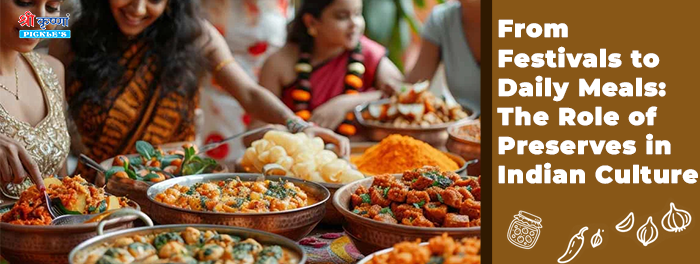
Indian culture is deeply rooted in tradition, seasonality, and mindful living. One of the most enduring expressions of this lifestyle is the art of food preservation. Long before refrigeration and modern storage methods, Indian households mastered the skill of turning fresh produce into long-lasting preserves. These preparations were not only practical but also cultural, connecting everyday meals with festive celebrations.
Preserves as a Way of Life
In India, preserving food has always been more than a method of storage. It reflects foresight, respect for nature, and the understanding of seasonal abundance. Fruits, vegetables, herbs, and spices harvested at their peak were carefully transformed into pickles, chutneys, murabbas, and sun-dried condiments. Each preserve carried the flavors of a particular season, making it possible to enjoy them throughout the year.
This practice was especially important in regions with extreme weather conditions, where fresh produce was not always available. Preserves ensured food security while adding variety and nutrition to daily meals.
A Festive Tradition Passed Through Generations
Preserves play a significant role during Indian festivals. Many festive spreads are incomplete without traditional accompaniments prepared weeks or even months in advance. Mango pickles, sweet lemon preserves, and spiced fruit chutneys are often made during specific seasons so they are ready in time for celebrations.
The process of making preserves is itself a cultural ritual. Families gather to clean, cut, spice, and store ingredients, turning the task into a shared experience. Recipes are passed down orally, preserving not just food but family heritage and regional identity.
Enhancing Everyday Meals
While preserves shine during festivals, their presence in everyday Indian meals is equally important. A simple plate of rice and lentils, curd rice, or plain flatbread can be instantly elevated with a spoonful of pickle or chutney. These preserves bring contrast in flavor and texture, making humble meals satisfying and complete.
They also help stimulate appetite and digestion, which is why they are commonly served in small quantities alongside main dishes. The balance of sweet, sour, salty, and spicy notes adds depth to daily food without requiring elaborate cooking.
Regional Diversity in Preservation
India’s vast geography has given rise to a wide variety of preservation techniques. Coastal regions favor fermented and sun-dried preparations, while northern parts of the country often rely on oil-based pickles and sugar-rich preserves. Eastern India is known for mustard-flavored condiments, while southern states use tamarind, curry leaves, and chilies extensively.
Each region’s preserves reflect its climate, crops, and cultural preferences, making them an edible map of India’s diversity.
Preserves in Modern Indian Homes
Even today, despite the availability of packaged foods, many Indian households continue to prepare preserves at home. These homemade versions are valued for their authenticity, purity, and emotional connection. At the same time, artisanal and small-scale producers are helping keep traditional methods alive while adapting them for modern lifestyles.
Preserves remain a bridge between the past and the present, offering comfort, nostalgia, and flavor in every bite.
A Cultural Legacy on Every Plate
From grand festival feasts to simple daily meals, preserves hold a special place in Indian culture. They tell stories of seasons, family traditions, and regional pride. More than just accompaniments, they are timeless symbols of India’s ability to blend practicality with flavor and tradition with everyday living.
Leave a Comment