
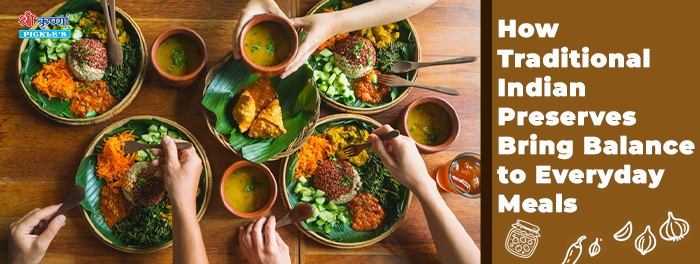
Indian meals are famous for their complexity — a careful dance of flavors that keeps the palate engaged from the first bite to the last. While curries, breads, and rice often take center stage, there is a quiet hero that completes the experience: Indian preserves. From tangy pickles to sweet-spicy chutneys, these age-old accompaniments are more than just side dishes. They are flavor balancers, cultural markers, and comfort foods rolled into one.
The Philosophy of Balance in Indian Food
At the heart of Indian cooking lies the idea of balance. A satisfying meal isn’t just about taste; it’s about harmony. Traditional Indian cuisine often brings together sweetness, sourness, heat, saltiness, and bitterness in measured proportions. Preserves play a crucial role in achieving this balance, especially when everyday meals are simple.
A plain dal-chawal, curd rice, or khichdi can be instantly transformed with a spoonful of pickle or chutney. These preserves add contrast, preventing meals from feeling monotonous and stimulating the appetite.
Sweet Preserves: Comfort and Calm
Sweet preserves such as fruit murabbas and chikkis offer more than just indulgence. Made from ingredients like amla, mango, apple, or rose petals, these preserves often carry subtle spices that prevent them from being overly sugary.
In many Indian households, sweet preserves are believed to cool the body, aid digestion, and provide quick energy. Amla murabba, for instance, balances sweetness with mild sourness and is traditionally consumed for its health benefits. Paired with flatbreads or eaten after meals, sweet preserves bring a sense of calm and completeness.
Sour Preserves: Awakening the Palate
Sourness is a powerful flavor in Indian food, and preserves are one of its most concentrated forms. Lemon pickles, raw mango preserves, and kokum preparations add sharpness that cuts through rich or bland dishes alike.
This tanginess isn’t just about taste. Sour preserves stimulate salivation and digestion, making heavy meals easier to enjoy. In hot climates, they also help refresh the palate, which is why they are especially popular in summer meals.
Spicy Preserves: The Bold Finisher
Indian pickles are known worldwide for their bold heat and intense aroma. Made with chilies, mustard oil, garlic, and a complex blend of spices, spicy preserves bring depth and character to every meal.
A small quantity is often enough. The heat wakes up the senses and enhances even the simplest food. In many regional cuisines, the spiciness of a pickle reflects local preferences, climate, and available ingredients, making each preserve a regional signature.
Preserves as Cultural Memory
Indian preserves are deeply tied to tradition. Recipes are passed down through generations, often handwritten or memorized. The annual ritual of pickle-making brings families together, turning seasonal produce into long-lasting treasures.
These preserves carry memories of home, festivals, and childhood meals. For many, the taste of a particular pickle or chutney is inseparable from emotions of comfort and belonging.
Completing the Indian Thali
A traditional Indian thali is incomplete without a preserve. Whether it’s sweet, sour, spicy, or a combination of all three, preserves act as the final layer that ties every dish together. They provide contrast, excitement, and satisfaction in every bite.
In a cuisine that values balance as much as flavor, Indian preserves quietly ensure that every meal feels whole.
Leave a Comment