
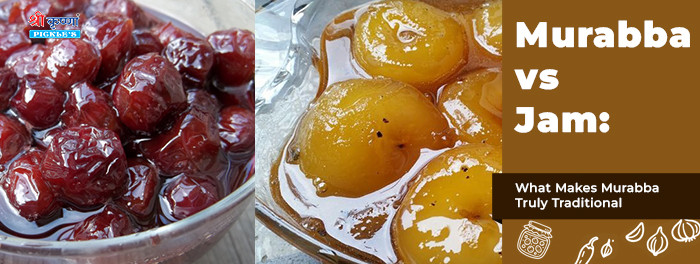
At first glance, murabba and jam may seem similar. Both are fruit-based, sweet, and enjoyed as accompaniments or spreads. However, beneath this shared sweetness lies a world of difference—one rooted in tradition, patience, and cultural heritage. While jam represents modern convenience, murabba reflects an age-old culinary practice deeply embedded in Indian households.
The Essence of Murabba: Whole Fruit Preservation
One of the defining characteristics of murabba is its use of whole or large pieces of fruit. Unlike jam, where fruits are crushed or pulped, murabba celebrates the fruit in its natural form. The fruit remains intact, absorbing sweetness slowly while retaining its texture, shape, and identity.
This method is not just about appearance; it reflects a philosophy of preservation that respects the original ingredient rather than transforming it beyond recognition.
The Role of Slow Cooking
Traditional murabba is prepared using slow-cooking techniques. Fruits are gently simmered in sugar syrup over time, allowing flavors to develop gradually. This process enhances depth, aroma, and balance without overwhelming sweetness.
Jam, on the other hand, is typically cooked quickly at higher temperatures to achieve a spreadable consistency. Speed and efficiency take priority, often resulting in a uniform flavor profile rather than layered complexity.
Ingredients and Simplicity
Murabba recipes rely on minimal ingredients—fruit, sugar, water, and occasionally mild spices such as cardamom or saffron. There is no need for artificial flavors, colors, or preservatives when time itself acts as a natural stabilizer.
Jams often include added pectin, citric acid, or preservatives to ensure consistency and shelf life. While effective, these additions distance jam from the simplicity and purity that define traditional murabba.
Texture: A Matter of Experience
Texture is where murabba truly stands apart. Each bite offers a soft yet structured feel, with fruit that melts gently in the mouth while still holding its form. The syrup complements rather than masks the fruit.
Jam is smooth, spreadable, and uniform by design. Its appeal lies in convenience, but it lacks the tactile experience that makes murabba a slow, mindful indulgence.
Cultural and Culinary Significance
Murabba has long been a part of Indian food culture, often served as a digestive accompaniment with meals. It was valued not just for taste but also for its perceived wellness benefits, especially varieties made from amla or seasonal fruits.
Jam entered Indian kitchens much later, influenced by Western breakfast traditions. It became popular as a quick spread for bread, aligning more with modern lifestyles than traditional meals.
Time, Tradition, and Taste
What truly makes murabba traditional is the time invested in its preparation. It is not rushed or mass-produced by nature. The process involves observation, patience, and experience—skills passed down through generations.
Jam reflects modern efficiency, while murabba embodies culinary heritage. One fits into busy routines; the other invites us to slow down and savor.
A Sweet Conclusion
Both murabba and jam have their place in today’s kitchens. Yet, murabba stands apart as a symbol of tradition, craftsmanship, and cultural continuity. It is not just a sweet preserve—it is a reminder of how food once connected people to seasons, rituals, and mindful living.
In choosing murabba, one chooses more than taste. One chooses tradition preserved in sweetness.
Leave a Comment