
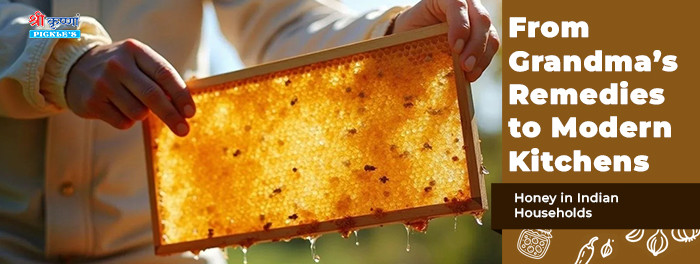
In almost every Indian home, honey has quietly held a place of respect for generations. Long before supermarket shelves displayed rows of imported jars and flavored variants, honey was known simply as shehad or madhu—a natural healer, a sacred offering, and a trusted kitchen staple. Its journey from grandma’s traditional remedies to today’s modern kitchens reflects how Indian households blend age-old wisdom with contemporary lifestyles.
A Golden Legacy from Our Grandmothers
For many of us, the first memory of honey is tied to childhood care. Grandmothers often reached for honey to soothe a sore throat, calm a cough, or boost immunity during changing seasons. Mixed with warm water, tulsi, ginger, or black pepper, honey was considered nature’s medicine—gentle yet effective.
In Ayurveda, honey has always been valued for its balancing properties. It was believed to help digestion, improve energy levels, and support overall wellness when consumed in moderation. These traditional uses were not backed by labels or marketing claims, but by years of observation, trust, and lived experience.
Honey in Daily Indian Rituals
Beyond health, honey has held cultural and spiritual significance in Indian households. It has been used in religious rituals, offerings (prasad), and even in traditional ceremonies like Annaprashan, where a child tastes food for the first time. Honey symbolized purity, prosperity, and sweetness in life—values deeply rooted in Indian traditions.
It also found its way into home remedies for skincare and hair care. From face packs mixed with turmeric to nourishing hair masks with curd, honey was a multipurpose ingredient long before “DIY beauty” became a trend.
Transition into the Modern Indian Kitchen
As lifestyles evolved, honey smoothly adapted to modern kitchens without losing its essence. Today, it is no longer limited to remedies; it has become a preferred natural sweetener. Health-conscious families are choosing honey over refined sugar for tea, smoothies, breakfast bowls, and desserts.
Modern Indian kitchens use honey in creative ways—drizzled over fruits, blended into salad dressings, added to marinades, or baked into cakes and cookies. Its versatility allows it to fit into both traditional recipes and global cuisines, making it a bridge between the past and the present.
Health Awareness and Natural Choices
With increasing awareness about clean eating and natural ingredients, honey has regained its importance in Indian households. Many people now look for raw, unprocessed, or locally sourced honey, valuing authenticity over artificial sweetness. This shift reflects a return to traditional wisdom, supported by modern knowledge.
Honey is also popular among fitness enthusiasts and working professionals who want quick energy without processed sugars. A spoonful of honey before a workout or during a busy day feels like a small yet meaningful nod to ancestral habits.
A Timeless Ingredient with a Modern Role
From the caring hands of grandmothers to sleek jars in contemporary kitchens, honey has remained a constant companion in Indian homes. Its role may have expanded, but its essence remains unchanged—natural, nourishing, and deeply trusted.
In a world that constantly chases new superfoods, honey stands as a reminder that some of the best solutions have always been close to home. Its journey through generations proves that tradition and modern living don’t have to compete; they can coexist beautifully, just like honey in the Indian household.
Leave a Comment