
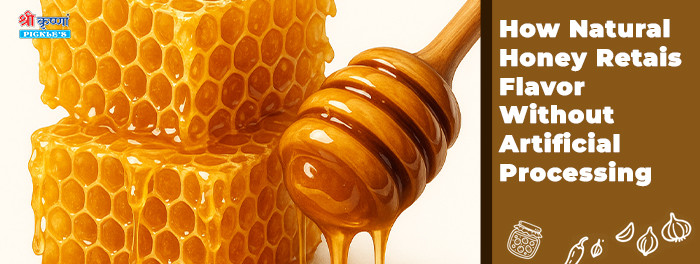
Honey is one of nature’s rare foods that arrives almost complete, needing little to no human intervention. Long before modern food factories existed, honey was consumed in its pure form—rich in aroma, layered in taste, and valued for its longevity. What makes natural honey special is not just its sweetness, but its ability to retain authentic flavor without artificial processing. This quality comes from the way honey is created, harvested, and preserved by nature itself.
The Natural Creation of Flavor
The flavor of honey begins in flowering plants. Bees collect nectar from different blossoms, and each flower contributes its own subtle notes—floral, woody, fruity, or herbal. As bees transform nectar into honey inside the hive, enzymes naturally break down complex sugars into simpler ones. This enzymatic process enhances flavor while also improving digestibility.
Unlike refined sweeteners, honey’s taste is shaped by geography, climate, and biodiversity. Honey from forest regions tastes different from honey harvested near mustard fields or orchards. These natural influences create flavor complexity that no artificial flavoring can replicate.
Enzymes: Nature’s Built-In Preservers
One of the reasons honey does not require artificial processing is its natural enzyme content. Bees add enzymes such as invertase and glucose oxidase, which help prevent spoilage. These enzymes slowly release mild antibacterial compounds that protect honey from fermentation and contamination.
Because of this self-preserving nature, raw honey maintains its flavor profile for years when stored properly. There is no need for chemical stabilizers or synthetic preservatives to extend shelf life.
Low Moisture, High Stability
Honey contains very little water, making it an unfriendly environment for bacteria and mold. This low moisture level naturally locks in flavor while preventing deterioration. Artificial processing often strips foods of their original taste in the name of preservation, but honey stays stable without such intervention.
When honey is left unheated and unfiltered, its natural aromas and taste remain intact. Excessive heating, commonly used in commercial processing, may make honey look clearer but often reduces its depth of flavor.
Minimal Handling Preserves Authentic Taste
Natural honey is typically extracted through simple methods like cold extraction and straining. These gentle techniques remove impurities without disturbing the honey’s natural structure. Since no artificial flavor enhancers or processing agents are added, the original taste remains unchanged.
In contrast, heavily processed honey may lose its floral notes and become uniformly sweet, lacking the character that makes natural honey unique.
Nature’s Perfect Balance
Honey retains its flavor because nature has already perfected its formula. From enzymatic activity to moisture control and antibacterial properties, honey is designed to preserve itself. Artificial processing is unnecessary and often counterproductive when it comes to maintaining taste.
This is why natural honey continues to be valued across cultures—not only as a sweetener but as a food that stays true to its origin. Each spoonful reflects the land it came from, untouched by artificial methods.
Conclusion
Natural honey’s ability to retain flavor without artificial processing is a testament to nature’s intelligence. Its taste is preserved through biological processes, careful harvesting, and minimal human interference. In a world of over-processed foods, honey stands as a reminder that some of the best flavors are those that are left exactly as nature intended.
Leave a Comment