
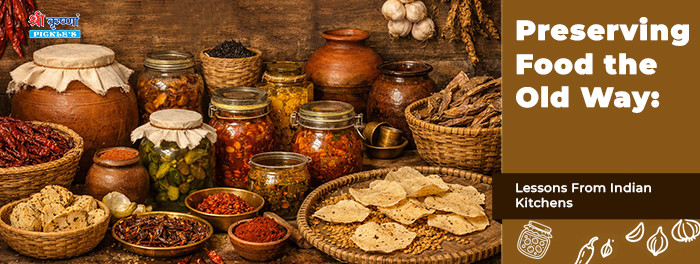
Long before refrigerators and chemical preservatives became common, Indian kitchens mastered the art of food preservation using nature, time, and intuition. These traditional methods were not only practical but deeply thoughtful, designed to retain flavor, nutrition, and balance. Even today, these age-old techniques offer valuable lessons in sustainability and mindful eating.
Preservation as a Seasonal Practice
Indian households have always cooked in harmony with the seasons. When fruits and vegetables were abundant, excess produce was preserved for later use. This ensured that food was never wasted and seasonal goodness could be enjoyed year-round. Preservation was not about convenience—it was about respect for nature’s cycles.
Sun-Drying: Nature’s Dehydrator
Sun-drying is one of the oldest and most widely used preservation methods in Indian kitchens. Ingredients like mango slices, vegetables, spices, and papads were dried under the sun to remove moisture naturally. This slowed spoilage while intensifying flavors. The gentle heat of the sun allowed food to retain its character without the need for artificial drying.
Salt, Sugar, and Oil: Natural Protectors
Traditional Indian preservation relied on natural ingredients with protective properties. Salt drew out moisture and prevented bacterial growth, sugar created concentrated environments unsuitable for spoilage, and oils acted as barriers against air and moisture. These elements formed the backbone of pickles, murabbas, and chutneys that could last for months.
Fermentation: Letting Time Do the Work
Fermentation was widely used to enhance both shelf life and flavor. Foods like pickles, batters, and fermented vegetables benefited from beneficial microorganisms that improved digestibility. This slow, patient process reflected a deep understanding of natural food science long before it was formally studied.
Spices With Purpose
In Indian kitchens, spices were never added just for taste. Many spices traditionally used in preservation also had protective and digestive-supporting qualities. Their inclusion helped maintain freshness while adding depth and complexity to preserved foods.
Cleanliness and Care
Hygiene played a crucial role in traditional preservation. Jars were sun-dried, hands were clean, and moisture was strictly avoided. These practices ensured longevity without artificial additives. Elders passed down these small but vital habits through observation and experience.
Patience Over Speed
Perhaps the most important lesson from Indian kitchens is patience. Preserved foods were allowed to mature slowly. Pickles were turned regularly under the sun, murabbas rested for flavor absorption, and fermented foods developed naturally. This unhurried approach resulted in richer flavors and longer shelf life.
Sustainability Before the Word Existed
Traditional preservation methods were inherently sustainable. They reduced waste, required minimal resources, and relied on renewable elements like sunlight. Indian kitchens practiced sustainability long before it became a global concern.
Relevance in Modern Times
As modern lifestyles move toward convenience, revisiting these old methods offers valuable insights. They encourage mindful consumption, reduce dependence on artificial preservatives, and reconnect us with wholesome food traditions.
Final Thoughts
Preserving food the old way was about more than survival—it was about wisdom. Indian kitchens taught us that with the right ingredients, care, and patience, food could be preserved naturally and respectfully. These lessons remain as relevant today as they were generations ago, reminding us that tradition often holds the key to sustainable living.
Leave a Comment