
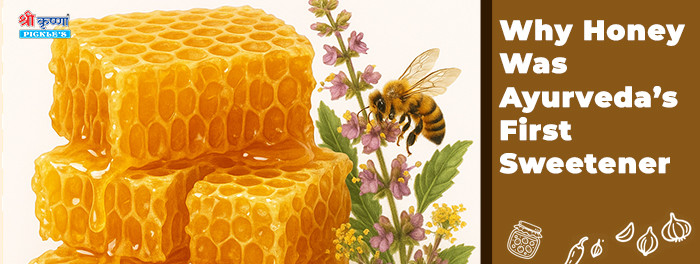
Long before refined sugar became a household staple, nature provided its own gentle sweetness—and Ayurveda recognized its value. Honey, known as Madhu in ancient texts, holds a unique and respected place in Ayurvedic wisdom. It was not just a sweetener, but a carefully understood substance with healing, balancing, and preservative qualities. The reasons why honey became Ayurveda’s first sweetener go far beyond taste alone.
Honey in Ancient Ayurvedic Texts
Ayurveda describes honey as one of the most remarkable natural foods. Classical texts praise its ability to balance the body when used correctly and in moderation. Unlike many sweet substances, honey was valued for its lightness and its capacity to support digestion, making it suitable for daily use in small quantities.
A Natural Sweetness With Functional Benefits
Honey stood out because it offered more than sweetness. It contains naturally occurring enzymes, minerals, and antioxidants that support overall wellness. Ayurveda viewed honey as a substance that could nourish without overwhelming the digestive system, especially when compared to heavier sweeteners.
Its gentle sweetness satisfied cravings while supporting balance, making it ideal for both food and medicinal preparations.
Supporting Digestion and Metabolism
One of the primary reasons honey earned its place in Ayurveda is its effect on digestion. When used appropriately, it is believed to stimulate digestive fire rather than suppress it. This quality made honey especially useful in herbal formulations, where it acted as a natural carrier that helped active ingredients absorb more effectively.
Honey as a Natural Preservative
Before modern preservation methods existed, honey’s long shelf life made it invaluable. Its low moisture content and natural properties helped prevent spoilage, allowing herbs and mixtures to remain effective for extended periods. This made honey an ideal base for traditional tonics, lehyams, and herbal blends.
Balancing the Doshas
Ayurveda emphasizes balance among the body’s energies, or doshas. Honey is traditionally considered balancing when consumed correctly, especially for Kapha-related concerns. Its warming and drying nature helped counter heaviness, making it a preferred sweetener in specific conditions.
A Sweetener That Encouraged Moderation
Unlike refined sugar, honey’s strong flavor naturally encourages mindful consumption. Ayurveda promoted moderation, and honey fit seamlessly into this philosophy. Small amounts were sufficient to deliver both sweetness and benefit, aligning with the principle that food should nourish rather than overstimulate.
Traditional Guidelines Around Honey
Ayurveda also emphasized proper usage of honey. It was traditionally recommended to avoid heating honey excessively, as this was believed to reduce its beneficial qualities. Such guidelines reflect the depth of understanding ancient practitioners had regarding food science and its impact on health.
Honey in Modern Wellness
Today, honey continues to be valued in holistic living. While modern diets offer countless sweeteners, honey remains a natural choice for those seeking a balance between taste and wellness. Its enduring presence is a testament to Ayurveda’s timeless wisdom.
Final Thoughts
Honey was Ayurveda’s first sweetener because it aligned perfectly with the system’s core principles—balance, digestion, preservation, and mindful nourishment. More than just a natural sweetener, honey was recognized as a functional food that supported health when used with care. In a world rediscovering traditional wisdom, honey continues to remind us that nature often provides the best solutions.
Leave a Comment