
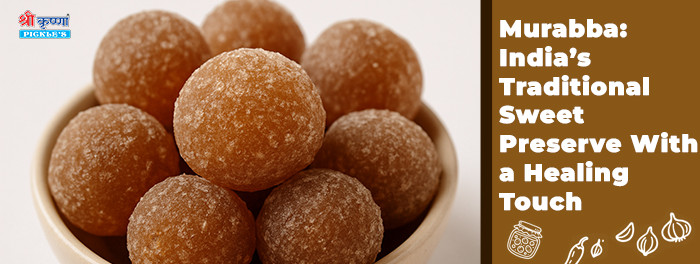
Long before modern supplements and packaged health foods, Indian kitchens relied on time-honored preparations to nourish the body and soul. One such treasure is murabba—a sweet fruit preserve that beautifully blends taste, tradition, and wellness. Slow-cooked in sugar syrup and infused with aromatic spices, murabba has been cherished for generations not only for its flavor but also for its healing qualities.
What Is Murabba?
Murabba is a traditional Indian preserve made by gently cooking whole fruits or large fruit pieces in sugar syrup until they become soft, glossy, and richly flavored. Commonly prepared using fruits like amla, apple, mango, carrot, or gulkand-style rose petals, murabba is often lightly spiced with cardamom, saffron, or cloves. The result is a sweet delicacy that can be enjoyed on its own or as part of a meal.
Amla Murabba: The Most Celebrated Variety
Among all types, amla murabba holds a special place in Indian households. Amla, also known as Indian gooseberry, is naturally rich in vitamin C and antioxidants. When preserved as murabba, its tartness mellows into a balanced sweetness, making it both delicious and beneficial. Traditionally, it is consumed in small quantities as a daily tonic to support digestion, immunity, and overall vitality.
The Traditional Preparation Process
Making murabba is a slow and patient process. Fruits are carefully cleaned, pricked or blanched, and then simmered in sugar syrup over low heat. This gentle cooking allows the fruit to absorb sweetness while retaining its structure and natural goodness. Over time, the syrup thickens and infuses the fruit with flavor, creating a preserve that can be stored and enjoyed for months.
Healing Benefits Rooted in Tradition
Murabba has long been associated with wellness in traditional Indian practices. It is believed to aid digestion, boost energy levels, and help balance the body, especially during seasonal changes. The combination of fruit nutrients and sugar acts as a natural energizer, while mild spices support digestive health.
Unlike heavily processed sweets, murabba is consumed in moderation and valued for its functional benefits rather than indulgence alone.
A Seasonal Companion for All Ages
Murabba is often recommended during extreme weather conditions—whether harsh winters or intense summers. It provides gentle nourishment, making it suitable for children, elders, and those recovering from illness. Its soft texture and natural sweetness make it easy to digest and comforting.
Murabba in Modern Times
Today, murabba continues to find its place in contemporary kitchens. While traditional recipes remain popular, modern variations use reduced sugar or innovative fruit combinations to suit evolving tastes. Despite these changes, the essence of murabba—slow cooking, natural ingredients, and mindful consumption—remains unchanged.
How to Enjoy Murabba
Murabba can be enjoyed in many ways:
-
As a small serving after meals
-
Paired with warm milk or plain curd
-
Alongside parathas or simple breakfasts
-
As a natural sweet treat between meals
A little goes a long way, making it both satisfying and wholesome.
Final Thoughts
Murabba is more than a sweet preserve—it is a reflection of India’s wisdom in food and healing. With its rich taste, gentle preparation, and nourishing qualities, murabba continues to bridge the gap between tradition and wellness. In every spoonful lies a reminder that food, when prepared with care and intention, can truly heal.
Leave a Comment