
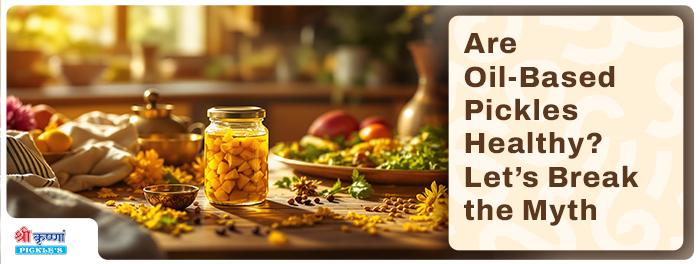
Why Oil is Used in Pickles
Oil is not just added for taste—it plays a crucial role in preserving pickles. Traditional oils like mustard oil act as a natural barrier, protecting the pickle from air, moisture, and harmful bacteria. This helps extend the shelf life without the need for artificial preservatives.
The Myth: Oil Means Unhealthy
The biggest misconception is that all oily foods are harmful. While excessive consumption of any oily food is not ideal, the oil used in pickles serves a specific purpose and is usually consumed in small quantities. You typically eat pickles as a side, not as a main dish, which limits the overall oil intake.
The Reality: It Depends on Quantity
Moderation is key. A small serving of oil-based pickle with your meal is unlikely to harm your health. In fact, it can enhance your appetite and make your meal more enjoyable. Problems arise only when pickles are consumed in large amounts regularly.
Benefits of Oil-Based Pickles
1. Natural Preservation
Oil helps keep pickles safe for long periods by preventing spoilage. This reduces the need for artificial chemicals.
2. Rich in Flavor and Satisfaction
The oil carries the flavors of spices and ingredients, making the pickle more aromatic and स्वादिष्ट. This can make simple meals more satisfying.
3. May Support Digestion
Some traditional pickles contain spices that aid digestion. When consumed in small amounts, they can complement your meal.
4. Source of Healthy Fats (Depending on Oil Used)
If made with good-quality oils like cold-pressed mustard oil, pickles can provide beneficial fats. These fats are better compared to highly processed oils.
When Oil-Based Pickles Can Be Unhealthy
- If consumed in large quantities daily
- If made with low-quality or refined oils
- If the salt content is very high
- If hygiene and preparation standards are poor
In such cases, pickles may contribute to health issues like high sodium intake or digestive discomfort.
Tips for Healthier Consumption
- Eat pickles in small portions
- Choose pickles made with traditional methods
- Prefer high-quality oils over refined ones
- Balance your meal with fresh vegetables and other nutritious foods
- Avoid overeating pickles as a snack
Final Thoughts
Oil-based pickles are not inherently unhealthy—they are often misunderstood. When made with quality ingredients and consumed in moderation, they can be a flavorful and enjoyable part of your diet. Instead of avoiding them completely, focus on balance and mindful eating. After all, the true essence of pickles lies in enhancing your meal, not overpowering it.
Leave a Comment