
Why People Think About Mixing Pickles
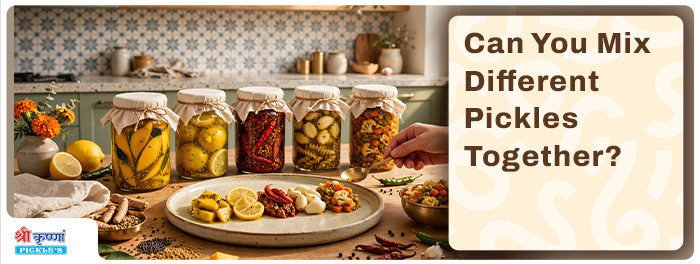
Sometimes you may have small quantities of different pickles left in jars, or you might want to experiment with new flavor combinations. Mixing pickles can seem like a creative way to avoid waste and try something unique. However, not all combinations work equally well.
When Mixing Pickles Works Well
1. Similar Flavor Profiles
Pickles with similar taste bases—like spicy mango and chili pickle—can blend well together. Since their spice levels and seasoning styles are alike, the combined flavor often feels natural rather than confusing.
2. Same Oil Base
Pickles made with the same type of oil (such as mustard oil) tend to mix better. Different oils can clash in taste and aroma, which may affect the overall flavor.
3. Balanced Salt and Spice Levels
If both pickles have similar saltiness and spice levels, mixing them is less likely to create an imbalance. This helps maintain a consistent taste.
When You Should Avoid Mixing
1. Very Different Flavors
Combining extremely different pickles—like a sweet lemon pickle with a very spicy garlic pickle—can result in a confusing taste. The flavors may not complement each other and could overpower the overall experience.
2. Different Preservation Methods
Some pickles are fermented, while others are preserved mainly in oil and salt. Mixing these can interfere with their preservation process and may reduce shelf life.
3. Old and Fresh Pickles Together
Avoid mixing older pickles with freshly made ones. The older batch may already have started to lose freshness, which can affect the newer pickle as well.
Tips for Mixing Pickles Safely
- Always use clean, dry utensils while mixing
- Mix small quantities first to test the taste
- Store the mixed pickle in an airtight, dry container
- Keep it refrigerated if unsure about shelf stability
- Consume the mixed pickle sooner rather than storing it for long periods
Creative Ways to Enjoy Mixed Pickles
If done thoughtfully, mixing pickles can lead to exciting flavors. For example, combining a mildly tangy pickle with a spicy one can create a balanced taste that suits a wider range of dishes. You can even use mixed pickles as a flavorful side with parathas, rice, or snacks.
Final Thoughts
Mixing different pickles is possible and can be a fun experiment in the kitchen. The key is to ensure compatibility in flavor, oil base, and freshness. While it’s a great way to explore new tastes, it’s best done in small batches with careful attention to balance. When done right, you might just discover a new favorite combination that adds an extra zing to your meals.
Leave a Comment