
1. Fresh and Natural Aroma
One of the first signs of a good pickle is its smell. It should have a pleasant, appetizing aroma that reflects its ingredients—spices, oil, and the main fruit or vegetable. A strong but natural fragrance is a positive sign, while any foul, sour (in a bad way), or chemical-like smell indicates spoilage or poor quality.
2. Rich and Balanced Color
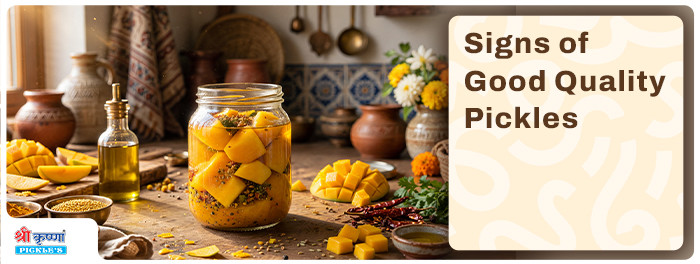
Good pickles have a vibrant, natural color. For example, mango pickles should look rich yellow or deep reddish depending on the spices used. The color should not appear dull, greyish, or artificially bright. Unnatural colors may indicate excessive preservatives or artificial additives.
3. Proper Oil Layer
In many traditional pickles, especially Indian ones, oil acts as a natural preservative. A good quality pickle will have a sufficient layer of oil on top, which protects it from air and bacteria. Too little oil may lead to spoilage, while overly greasy pickles may feel unbalanced.
4. Right Texture of Ingredients
The fruits or vegetables in a good pickle should be firm yet tender. They should not be overly soft, mushy, or dried out. Proper texture indicates that the pickle has been prepared and stored correctly.
5. Well-Blended Spices
High-quality pickles have evenly mixed spices that coat every piece properly. You shouldn’t find clumps of spices in one area and bland pieces in another. Each bite should deliver a consistent flavor.
6. Balanced Taste
A good pickle strikes the right balance between salty, spicy, tangy, and sometimes slightly sweet flavors. Each flavor should complement the others without any one dominating. If the pickle feels too salty, extremely sour, or overly spicy without balance, it may not be of good quality.
7. No Signs of Spoilage
Always check for visible signs of spoilage before consuming pickles. These include:
- Mold or white/black spots
- Unpleasant odor
- Gas bubbles or unusual fizz (in non-fermented pickles)
- Slimy or sticky texture
If you spot any of these signs, it’s safer to throw the pickle away.
8. Clean and Hygienic Packaging
For store-bought pickles, packaging matters a lot. The jar or container should be clean, properly sealed, and free from leaks. Labels should clearly mention ingredients and manufacturing details, reflecting transparency and quality standards.
9. No Artificial Aftertaste
Good pickles made with traditional methods do not leave a chemical or artificial aftertaste. The flavors should feel natural and authentic, lingering pleasantly after eating.
10. Made with Quality Ingredients
The foundation of a great pickle lies in its ingredients. Fresh fruits or vegetables, good-quality oil (like mustard oil), and pure spices make a big difference. Low-quality raw materials often result in poor taste and shorter shelf life.
Final Thoughts
Recognizing good quality pickles is easy once you know what to look for. From aroma and color to texture and taste, every detail matters. Whether homemade or store-bought, always choose pickles that reflect freshness, balance, and authenticity. A good pickle not only enhances your meal but also gives you the confidence that you’re consuming something safe and delicious.
Leave a Comment