
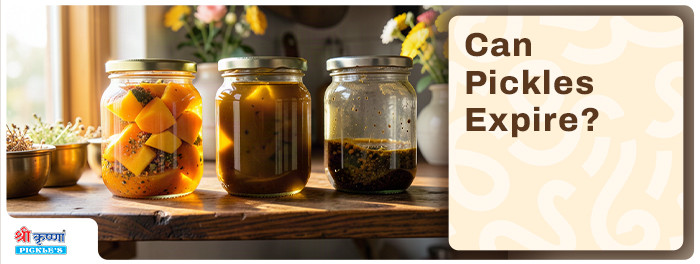
The truth is, while pickles are naturally preserved, they don’t last indefinitely. Like any food, they can eventually go bad. Let’s understand how pickle shelf life works and how to tell if they are still safe to eat.
Why Pickles Last So Long
Pickles are designed to stay fresh for extended periods due to traditional preservation methods.
Key factors that increase shelf life include:
- High salt content
- Oil as a protective layer
- Natural acidity (from lemon, mango, or vinegar)
- Use of spices with antimicrobial properties
These elements create an environment where harmful bacteria struggle to survive.
Do Pickles Really Expire?
Yes, pickles do expire—but much slower than most foods.
Instead of suddenly going bad, pickles usually:
- Gradually lose flavor and texture
- Change in smell or color over time
- Become unsafe only if contaminated or improperly stored
Homemade pickles can last for months to a year, while commercially packaged ones may last longer due to controlled processing.
Shelf Life of Different Types of Pickles
The lifespan of pickles depends on how they are made.
1. Oil-Based Pickles
- Can last 6 months to 1 year or more
- Require proper oil coverage
2. Vinegar-Based Pickles
- Often last longer due to high acidity
- Can stay fresh for over a year if unopened
3. Instant or Fresh Pickles
- Short shelf life (a few days to weeks)
- Usually need refrigeration
Signs That Pickles Have Gone Bad
It’s important to check your pickles before consuming them. Look out for these signs:
- Foul or unusual smell
- Visible mold or fungal growth
- Change in color (too dark or dull)
- Slimy or overly soft texture
- Gas formation or bubbling
If these symptoms are present, it’s advisable to discard it immediately.
Common Reasons Pickles Spoil
Even though pickles are preserved, certain mistakes can cause them to spoil:
- Using wet or unclean spoons
- Exposure to moisture
- Insufficient oil or salt
- Storing in poor-quality containers
- Keeping in humid conditions
Proper handling is key to maintaining freshness.
How to Extend Pickle Shelf Life
To keep your pickles fresh for longer:
- Always use dry, clean utensils
- Ensure a layer of oil covers the pickle
- Store in airtight glass or ceramic jars
- Keep away from moisture and direct contamination
- Place in sunlight occasionally (for traditional pickles)
Does Refrigeration Help?
Refrigeration is not always necessary for traditional pickles, but it can:
- Slow down spoilage
- Help preserve flavor for longer
- Be useful for low-oil or instant pickles
However, properly made traditional pickles can safely stay outside the fridge.
Expiry Date vs Real Freshness
Packaged pickles come with an expiry date, but this doesn’t always mean they instantly go bad after that date.
- It usually indicates best quality, not safety
- Always rely on smell, taste, and appearance before consuming
Conclusion
Yes, pickles can expire—but their natural preservation methods give them an impressively long shelf life. With proper preparation and storage, they can remain safe and flavorful for months.
The key is to watch for signs of spoilage and maintain good hygiene while handling them. When cared for properly, your pickles can continue to add delicious flavor to your meals for a long time.
Leave a Comment