
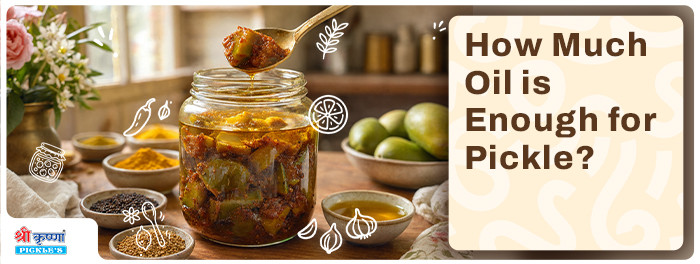
Using too little oil can spoil the pickle, while too much can make it overly greasy. Let’s understand the right balance.
Why Oil is Essential in Pickles
Oil acts as a natural preservative and protective layer. In traditional pickle-making, especially in Indian recipes, oils like mustard oil are widely used.
Oil helps by:
- Preventing air and moisture from entering
- Inhibiting bacterial and fungal growth
- Enhancing the absorption of spices
- Maintaining texture and flavor over time
Without enough oil, the pickle can spoil quickly.
The Ideal Oil Quantity
There is no single fixed quantity, but a general rule works well for most pickles.
Basic Rule:
- Oil should be enough to fully coat all the ingredients
- A thin layer of oil should float on top of the pickle
Approximate Ratio:
- 20% to 40% of the total weight of ingredients
For example:
- If you are using 1 kg of mangoes, around 200–400 ml of oil is typically sufficient
This may vary depending on the type of pickle.
Oil Requirement by Pickle Type
Different pickles need different amounts of oil.
1. Mango Pickle (Aam Ka Achar)
- Requires more oil
- Ensures long shelf life
- Oil layer on top is essential
2. Lemon Pickle
- Needs moderate oil
- Often relies on natural acidity as well
3. Chili Pickle
- Moderate to high oil
- Helps balance spiciness
4. Mixed Vegetable Pickle
- Medium oil
- Depends on moisture content of vegetables
Signs You Have Enough Oil
You’ve added the right amount of oil if:
- All pieces are well-coated
- No part of the pickle looks dry
- A visible oil layer forms on top
- The pickle stays fresh without fungal growth
What Happens If Oil is Too Less?
Insufficient oil can lead to:
- Spoilage due to moisture exposure
- Growth of fungus
- Sour or unpleasant smell
- Reduced shelf life
Even a well-made pickle can go bad if oil is not enough.
What Happens If Oil is Too Much?
Excess oil may not spoil the pickle, but it can:
- Make the pickle overly greasy
- Mask the natural flavors
- Increase calorie intake
However, extra oil can always be removed later if needed.
Tips for Using Oil Correctly
- Always heat the oil slightly and cool it before use
- Use high-quality oil like cold-pressed mustard oil
- Ensure ingredients are completely dry before mixing
- Check the oil level occasionally and top up if required
Traditional Wisdom Behind Oil Usage
In traditional kitchens, oil was never measured with strict tools. Instead, experience guided the process. The idea was simple—use enough oil to protect and preserve, not just to cook.
That’s why many homemade pickles last for months without refrigeration.
Conclusion
The right amount of oil in pickle is all about balance. It should be enough to coat and protect every ingredient while forming a thin layer on top. Too little oil risks spoilage, while too much can affect taste.
When used correctly, oil becomes the secret behind a long-lasting, flavorful, and authentic pickle—just the way it has been made for generations.
Leave a Comment