
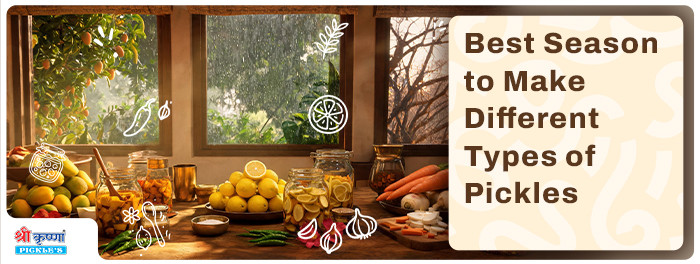
Let’s explore the best seasons to make various types of pickles and why timing matters so much.
Why Season Matters in Pickle Making
Traditional pickle-making depends heavily on nature. The right season ensures:
- Fresh and naturally ripened ingredients
- Ideal sunlight for curing
- Low moisture levels to prevent spoilage
Seasonal preparation not only enhances flavor but also helps pickles last longer without artificial preservatives.
Summer – The King of Pickle Seasons
Summer is considered the best time for making most traditional pickles.
Why Summer is Ideal:
- Strong sunlight helps in natural curing
- Low humidity reduces chances of fungus
- Ingredients like raw mango are easily available
Popular Summer Pickles:
- Aam ka achar (raw mango pickle)
- Lemon pickle
- Green chili pickle
The intense heat helps remove moisture and allows spices and oil to blend perfectly, resulting in rich flavors.
Winter – Perfect for Hearty and Mixed Pickles
Winter offers a different range of vegetables, making it ideal for certain types of pickles.
Why Winter Works:
- Fresh seasonal vegetables are abundant
- Cooler temperatures help slow fermentation
- Ideal for oil-based and mixed pickles
Popular Winter Pickles:
- Mixed vegetable pickle (gajar, gobhi, shalgam)
- Garlic pickle
- Carrot pickle
These pickles are often slightly tangy and spicy, complementing winter meals beautifully.
Monsoon – Not Ideal, But Manageable
The rainy season is generally avoided for pickle-making.
Challenges During Monsoon:
- High humidity increases risk of spoilage
- Lack of sunlight affects curing
- Moisture can lead to fungal growth
If You Must Make Pickles:
- Ensure ingredients are completely dry
- Use extra oil and salt
- Store in airtight containers
While it’s possible, extra care is needed to maintain quality.
Seasonal Fruits and Their Pickling Time
Different fruits are available at different times, making seasonality important.
- Raw Mango – Best in peak summer
- Lemon – Late winter to early summer
- Amla (Indian gooseberry) – Winter
- Karonda – Early monsoon or late summer
Using fruits in their natural season ensures better taste and nutritional value.
The Role of Sunlight and Temperature
Sunlight is a key factor in traditional pickle-making.
- Helps reduce moisture
- Enhances fermentation
- Improves shelf life
Warm temperatures allow spices and oil to penetrate deeply into the ingredients, creating that authentic taste.
Traditional Wisdom Behind Seasonal Pickles
Our ancestors didn’t rely on refrigeration or preservatives. Instead, they understood the rhythm of nature:
- Summer for sun-curing
- Winter for slow fermentation
- Avoiding monsoon due to moisture
This knowledge ensured that pickles stayed fresh and flavorful for months, sometimes even years.
Tips for Perfect Seasonal Pickle Making
- Always use fresh, seasonal produce
- Ensure ingredients are completely dry before mixing
- Use clean, dry jars for storage
- Keep pickles in sunlight whenever required
- Avoid moisture at all costs
Conclusion
The best season for making pickles depends on the type of ingredients and the method used. Summer remains the most favorable time, while winter offers unique opportunities for mixed and vegetable pickles. Monsoon, though challenging, can still work with extra precautions.
By following seasonal traditions, you not only preserve food but also capture the authentic flavors of each time of year. After all, great pickles are not just made—they are timed perfectly with nature.
Leave a Comment